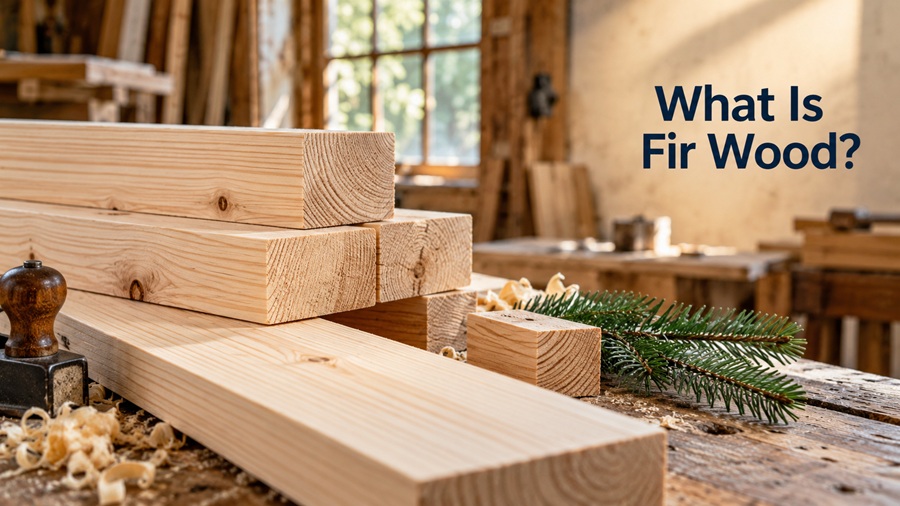
What is fir wood? It is wood from fir trees, a group of evergreen trees that have needles. Fir wood is often used in building making plywood making boxes and other everyday things. The way it looks and how it works can be different depending on the type of tree so the name on a piece of wood can be important when you are picking wood for a project.
One thing that people often get confused about is that Douglas-fir is not a fir. Real firs are part of the Abies group while Douglas-fir is part of the Pseudotsuga group. Some stores might put types of wood together and call them “Hem-fir.”
What Is Fir Wood Made From?
Fir wood comes from trees in the Abies group. These trees live in places and include types like balsam fir, white fir, grand fir and subalpine fir. Because the types are “fir” is a term for a group of woods rather than one single kind.
Real firs are softwoods, a name that refers to the group of trees they come from—not a promise that every board’s very soft. Fir wood is often sold with spruce and pine in stores that sell building supplies. Different types of fir are used for things like building materials, plywood and paper.
Real. Douglas-Fir: What’s the Difference?
Real firs are part of Abies. Douglas-fir has “fir” in its name. Is a different kind of tree when you look at it closely. The difference is important because wood sold as Douglas-fir can have strengths and uses compared to wood made from real fir types.
Why Douglas-Fir Needs a Closer Look
Douglas-fir is used in buildings a lot. It should not be seen as the same as every real fir. If a project needs a strength or type check the stamp on the wood and the product details instead of just relying on the word “fir.”
What Does Fir Wood Look Like?
Many real fir boards have a color, often white or yellow with a simple pattern. The exact color and look depend on the type of tree how the wood was cut and the finish on the board. Fir can work well for projects where a light and simple wood surface is needed.
Like kinds of wood fir can have knots, small marks and different patterns from board to board. If the look is important check the boards before buying instead of just choosing based on the name.
Common Uses of Fir Wood
Fir is used for things when the right types and grades are available. Examples include:
- Building frames and structures
- Plywood and other made wood products
- Boxes and containers
- Doors, frames and other wood parts
- Paper and pulp products
Subalpine fir is used for building materials, boxes, containers, doors, frames and food boxes. Balsam fir is used for making paper and for building parts while some white fir is used for building frames and plywood. These examples show why it is helpful to know the type and grade of thinking all fir wood is the same.
Pros and Cons of Fir Wood
Advantages
Fir is often used for building products so it might be available through stores that sell wood in the grades. Its lighter look can be good if you want a wood surface and it is used in many products from building materials to plywood and boxes.
The different types of fir also give people options. Some are mainly for paper while others are used in building products. The best choice depends on what the project needs and what the wood is made of.
Limitations
Fir types can have limited protection against rot and bugs, which makes fir not a good choice for places that are always wet or in the ground. Balsam fir for example is light and not very strong. It breaks down quickly and is not good for posts or poles.
Fir boards can also have strength and quality. For building work use wood that has the grade and follow the plans or rules for the project. For use check if the product is treated and rated for the conditions it will face.
Fir Wood Compared With Pine and Spruce
Fir, pine and spruce are all softwoods. They can look similar when you see a stack of wood. Their features change depending on the type, grade and what they are used for. There is no one simple rule that applies to every board.
| Wood type | What to keep in mind |
|---|---|
| Fir | Has types; often used in building products, plywood and paper |
| Pine | A group of woods with different looks and uses |
| Spruce | Commonly sold with pine and fir in building wood groups |
| Douglas-fir | A different kind of tree from real fir; check the grade and product details |
Some fir wood is sold in groups with spruce and pine. That means a label at a store may describe a group of wood of one single tree type.
Is Fir Wood a Good Choice for Your Project?
Fir wood can be a choice for building frames, plywood, boxes and other things when the type and grade match the job. It can also be good for projects where the light look is what you want.
For a project that’s outside and gets rain, wet soil or a lot of moisture check the treatment and how the product is rated before buying. For beams, frames or other building work follow the grade and local rules. A store label or a sales person can help you make sure you are getting the type and grade.
Frequently Asked Questions
1. Is fir wood a hardwood or a softwood?
Fir is a softwood because it comes from trees that have needles and are in the Abies group.
2. Is Douglas-fir real fir wood?
Douglas-fir is not a fir. It is part of the Pseudotsuga group while real firs are part of Abies.
3. Is fir wood good for use?
It depends on the type, treatment and how much it will be outside. Some firs do not last long in places so check if the wood is rated or treated for outside use before you use it.
4. What is fir wood often used for?
Fir types are used in building structures, frames, plywood, boxes, containers, doors, frames and paper products.
5. How can I tell fir apart from pine or spruce?
Color and patterns can give you some clues but looking softwoods can be hard to tell apart just by looking. Check the label on the wood the species name or the store information for an idea.
Conclusion
What is fir wood? It is wood from fir trees in the Abies group used for things, like building materials, plywood, boxes and paper. Its look, strength and how long it lasts can be different depending on the type. Check the type, grade and how it is rated to make sure the wood works for your project.