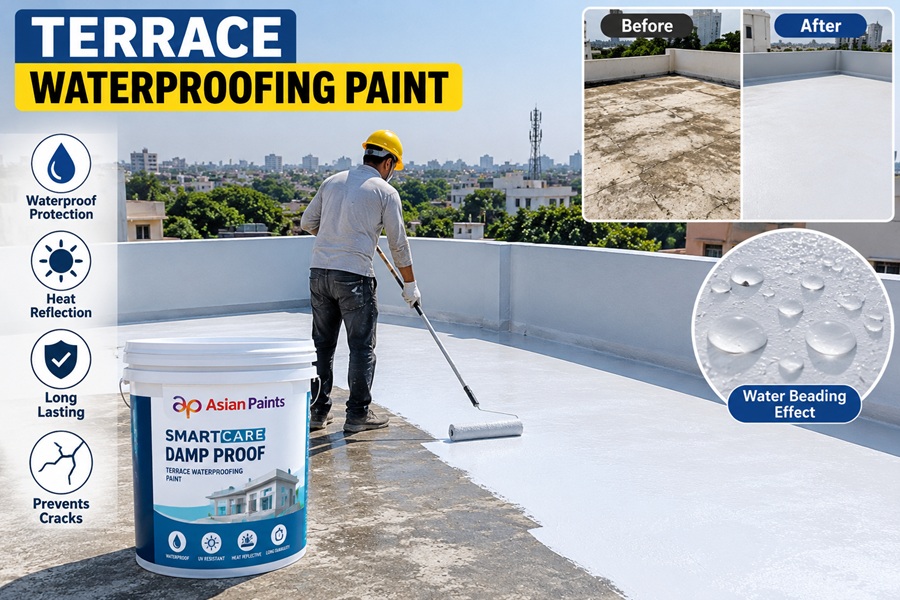
Terrace Waterproofing Paint is a name for liquid coatings that are used to help protect a roof terrace from rainwater. Unlike exterior paint a waterproofing coating is made to create a protective layer over a suitable surface. The right system depends on the terrace material its condition, drainage, and whether water is already leaking inside.
A coating can help protect a terrace but it may not fix major cracks, loose screed, bad drainage or a failed waterproofing layer under tiles. Check the roof. Follow the chosen product’s instructions before starting.
What Is Terrace Waterproofing Paint?
Terrace Waterproofing Paint is usually a liquid-applied coating that dries or cures into a protective film. Some systems use acrylic or elastomeric coatings; others use polyurethane-based products or cementitious coatings. The product label should say if it is suitable for exposed roof surfaces.
For example Dr. Fixit describes Roofseal Select as a terrace coating for surfaces like cementitious screeds, brick-bat coba and china mosaic. Sika also lists liquid-applied roof coatings for other substrates. These examples show why the products stated use is important: a coating made for walls may not be good for a walkable terrace.
Polyurethane based liquid applied waterproofing
Waterproofing Coating vs Regular Paint
Regular paint mainly adds color and a finish. A roof waterproofing coating is made for water exposure. May be made to stretch slightly as the surface moves. It still needs a properly prepared surface and correct application to work as intended.
Types of Terrace Waterproofing Coatings
Acrylic or Elastomeric Coatings
These coatings make a film and are often used on exposed roofs when the product is meant for that purpose. Some are water-based. May be applied with a brush or roller. Check the product data sheet for approved surfaces, primer needs and exposure limits.
Polyurethane-Based Coatings
Polyurethane systems are used in some roof waterproofing projects. May offer a seamless coating. Application needs can be more specific so check the manufacturer’s guidance for surface moisture, primer, thickness and curing conditions.
Polyurethane based liquid applied waterproofing
Cementitious Waterproofing Coatings
Cementitious products are mixed or supplied as coating systems and are used on concrete or masonry surfaces. They may be right for some situations. The system must fit the terrace’s exposure and use. Follow the product instructions of thinking all coatings work the same way.
Benefits of Terrace Waterproofing Paint
A suitable coating can:
- Help reduce rainwater getting through a matching, roof surface.
- Cover the surface with a layer when applied as specified.
- Help protect the base from regular weather exposure.
- Make an old terrace coating look new again.
- Provide a disruptive option than some bigger waterproofing works when the existing surface is in good condition.
The result depends on the product, preparation, application and roof condition. A coating should not be seen as a replacement for fixing cracks or fixing water drainage.
How to Apply Terrace Waterproofing Paint
Always use the product’s data sheet as the main guide. Number of coats, primer, coverage drying time and reinforcement needs differ between systems.
1. Check the Terrace
Look for cracks, loose areas, peeling coatings, algae, damaged joints, blocked drains, and places where water gathers. If there is leakage, big damage, or a problem that keeps happening, think about getting a waterproofing expert to find the cause before applying a surface coating.
2. Get the Surface Ready
Take away dust, loose material, dirt, algae, grease and other dirt. The surface should meet the product’s needs for dryness or dampness. Sika’s roof coating guidance for example wants to clean dirt and avoid standing water on the surface.
Liquid-Applied Membrane
Fix damaged areas before coating. Paints’ product info also says to fix hollow surface areas and uses a terrace-tile primer for certain smooth or glossy cementitious surfaces. Asianpaints.com
3. Fix. Details
Use repair materials that are recommended for the chosen system. Pay attention to corners, parapet-wall junctions, pipe penetrations, drains and joints. These areas can be weak to water. The system may need sealant, reinforcement fabric or another detailing coat.
Be Careful with Junctions and Drains
Don’t paint over open joints or broken drain edges. Follow the product instructions for reinforcing or sealing these places and keep outlets open so water can flow away.
4. Apply Primer and Coats as Told
Mix. Dilute the product only as told. Apply the primer then the number of coats and coverage needed. Let each coat dry for the time stated. Don’t think a thicker coat or an extra coat will make up for preparation.
5. Let the Coating Cure
Keep the coating away from rain, standing water, dust and people for the time the maker says. Sika says ponding tests should only be done after the coating is fully cured; its guidance also warns against ponding before the final coating is cured.
Liquid Applied Membranes
How to Pick the Right Product
Before buying check that the label or technical sheet says:
| What to check | Why it matters |
|---|---|
| Surface | The coating must fit concrete, screed, tiles or another base |
| Roof use | Wall coatings may not be made for roof exposure |
| Primer and repair system | Preparation products can change how well it sticks |
| Coverage and how many coats | Help figure out how how long it takes |
| Curing and weather limits | Fresh coatings need good conditions to cure |
| Warranty details | Coverage may depend on proper preparation and use |
Look at product instructions not just the size of the container or the warranty that is advertised. Ask the maker or an applicator if the system is good for your terrace’s finish and water exposure.
Common Mistakes to Avoid
- Putting coating over dust loose paint or algae.
- Missing cracks, joints, parapet edges or drain details.
- Using a wall coating on a terrace without checking if it works.
- Putting the product on when rain is coming.
- Letting water collect because the terrace has drainage.
- Testing the coating before it is fully cured.
- Thinking a surface coat will fix a problem or failed waterproofing.
Frequently Asked Questions
1. Can terrace waterproofing paint stop leaks?
It can help if the product is right for the surface and the terrace is prepared well. Active leaks can also come from cracks, drains, joints or a failed system under which may need fixing
2. Can I put waterproofing paint over terrace tiles?
Some products are made for tiled surfaces but they may need a special primer and preparation. Check the product sheet for the tile type and how to use it.
3. How coats should I use?
The number needed depends on the product. Follow its data sheet for coats, coverage and drying time.
4. Can I apply the coating before rain?
Avoid putting it on when rain might hit the coating before it cures. Check the maker’s weather and curing instructions.
5. Is terrace waterproofing paint for a walkable roof?
That depends on the coating’s use. If it needs a topcoat or layer to protect it. Check the product info before using the terrace.
Conclusion
Terrace Waterproofing Paint can help protect a roof surface when the coating is right for horizontal exposure and is used properly. Get the terrace ready fix cracks and junctions keep drains clear and follow the product’s primer, coat and curing instructions. For leaks big damage or water standing find out the reason, before depending on a surface coating.